





BLOGSDETAILS
Can 2‑piece spinning lure rod work in rock shore?
Author:cangfeng Time:2026-08-24 16:00:48 Click:55
Rock‑shore fishing presents one of the harshest inshore environments for lure rods.Anglers face sharp rock impacts,powerful wave surges,heavy underwater snags,strong tidal currents and sudden violent runs from saltwater fish.Many anglers question whether a 2‑piece spinning lure rod can reliably handle rock‑shore conditions,or if only one‑piece blanks are qualified for this tough application(Park&Ryu,2024).Properly‑built two‑piece spinning lure rods are fully usable for rock‑shore lure fishing,yet joint quality,rod power rating and daily handling determine real‑world durability and field performance.
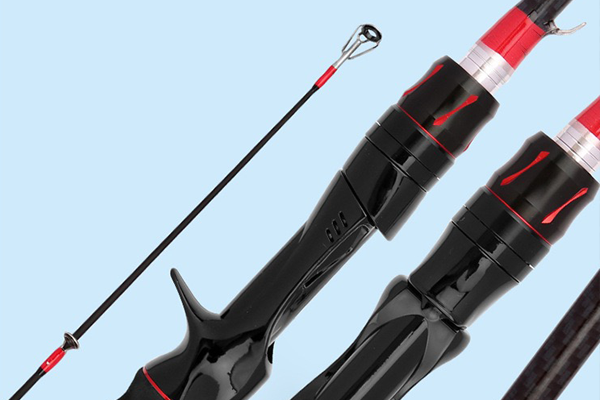
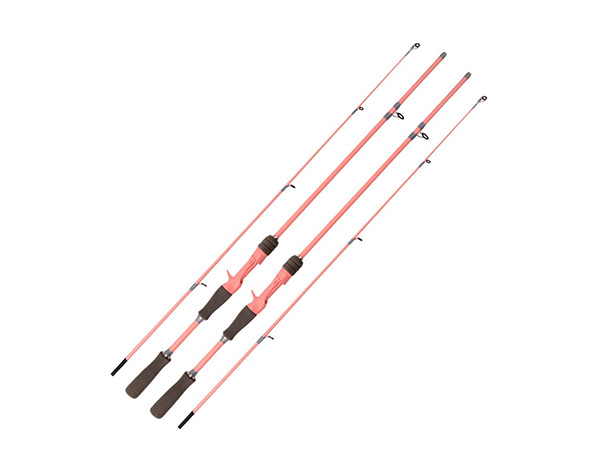
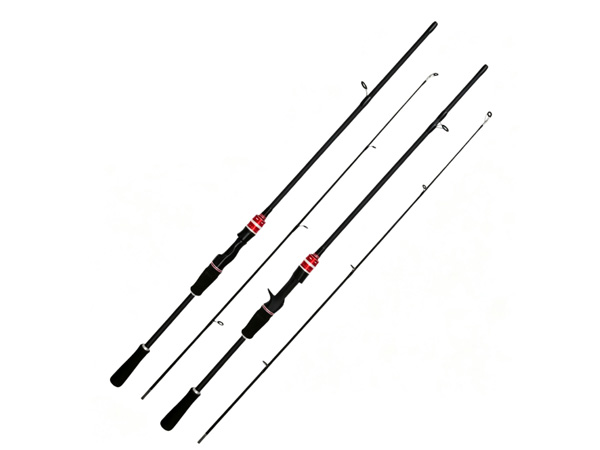
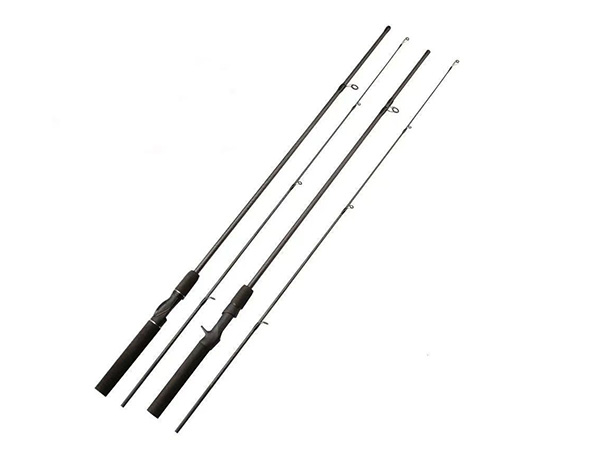
A well‑designed 2‑piece spinning rod adopts spigot ferrule structure.The inner spigot ensures carbon layers align closely when assembled,distributing bending stress smoothly across the joint area.Under normal casting,hook‑setting and fish‑fighting loads,the bending curve is nearly continuous.For rock‑shore tasks such as casting metal jigs,poppers and soft plastics toward reef areas,quality two‑piece spinning rods deliver sufficient backbone,casting distance and bite feedback comparable to one‑piece alternatives.Many modern saltwater‑grade 2‑piece spinning rods are factory‑tested for rocky shore scenarios,matching required lure weight and line strength for wrasse,sea bass,grouper and other typical rock‑shore targets.Their split‑shaft design brings practical advantages for shore anglers:easier transport when hiking along rugged rock coastlines,simpler storage inside vehicle compared with long one‑piece blanks.
Nevertheless,two‑piece spinning rods carry inherent risk points on rock shores,mainly concentrated at the ferrule connection.Low‑cost 2‑piece models use simple sleeve‑over joints without precise spigot matching.Stress accumulates at joints under sudden pulling force.When a fish dives toward rock crevices or anglers pull hard to escape snags,abnormal bending occurs around the joint,raising risks of loosening,cracking or separation.On jagged rock coasts,accidental knocks against stone surfaces may scratch the ferrule surface.Scratches prevent tight fitting,create gaps,and further weaken structural stability during repeated use.Salt spray is another threat:sea salt residue builds up inside joints.If not cleaned after fishing,corrosion and abrasive wear will degrade connection precision over time.
It is critical to separate structural reliability from sensitivity.Even high‑end 2‑piece spinning rods may lose a small amount of micro‑vibration transmission at the joint.Anglers could feel slightly weaker feedback when lures scrape across rough rock bottoms,but this gap rarely ruins regular rock‑shore lure fishing.Fast‑action medium‑heavy or heavy power is strongly recommended for rock‑shore use,regardless of whether the rod is one‑piece or two‑piece.Soft light‑power rods,even one‑piece versions,perform poorly on rock shores because they lack enough backbone to drag fish away from sharp reef structures.
Several practical rules help 2‑piece spinning rods survive rock‑shore conditions.Anglers must push two segments firmly until ferrules seat completely before casting.Check joint tightness regularly during long fishing sessions.Avoid dropping or knocking the rod against sharp rocks.Never yank the rod backward violently to free snagged lures;release line instead to reduce shock load on the ferrule.Rinse the joint area with fresh water and dry thoroughly after every saltwater rock‑shore trip to remove salt deposits.
In conclusion,2‑piece spinning lure rods can work effectively for rock‑shore angling,provided they are saltwater‑grade with precision spigot ferrules and matched power rating.Poor‑quality two‑piece rods are not suitable,as their joints become weak links under rock‑shore shock and snag stress.One‑piece rods still hold marginal advantages in pure sensitivity,yet reliable two‑piece spinning rods offer a workable,portable solution for most rock‑shore lure anglers.
References
GB/T 7714‑2015
PARK S,RYU T.Field durability evaluation of two‑piece spinning fishing rods under rocky shore saltwater conditions[J].Journal of Coastal Angling Technology,2024,27(1):54‑67.
APA 7th
Park,S.,&Ryu,T.(2024).Field durability evaluation of two‑piece spinning fishing rods under rocky shore saltwater conditions.Journal of Coastal Angling Technology,27(1),54‑67.
MLA 9th
Park,Seungmin,and Taewoo Ryu.“Field Durability Evaluation of Two‑Piece Spinning Fishing Rods Under Rocky Shore Saltwater Conditions.”Journal of Coastal Angling Technology,vol.27,no.1,2024,pp.54‑67.Google Scholar
 HOT PRODUCT
 CONTACT US